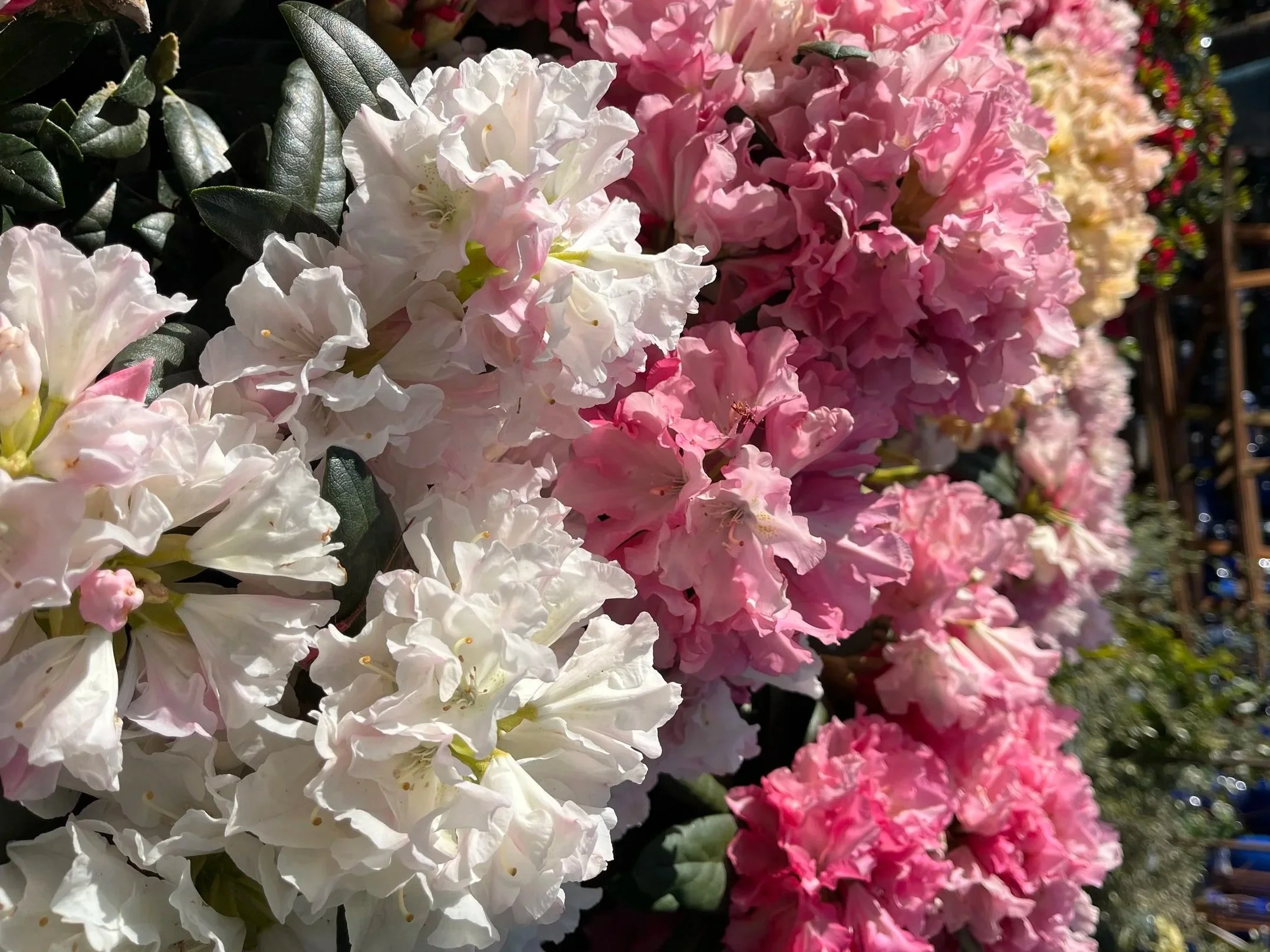
Azaleas & Rhododendrons
Click on a button above or scroll to explore our Azalea and Rhododendron varieties. On some browsers, you may need to refresh the page to use the buttons.
Availability: West Seattle Nursery is always happy to take your request for rhododendrons we don't have in stock. There are thousands of hybrid rhodies, but only a few hundred are grown at larger scale commercially. Please understand we may not be able to fulfill your request either because the plant is not in commercial production, or because the fact that rhododendrons can be propagated only once per year may limit their availability.
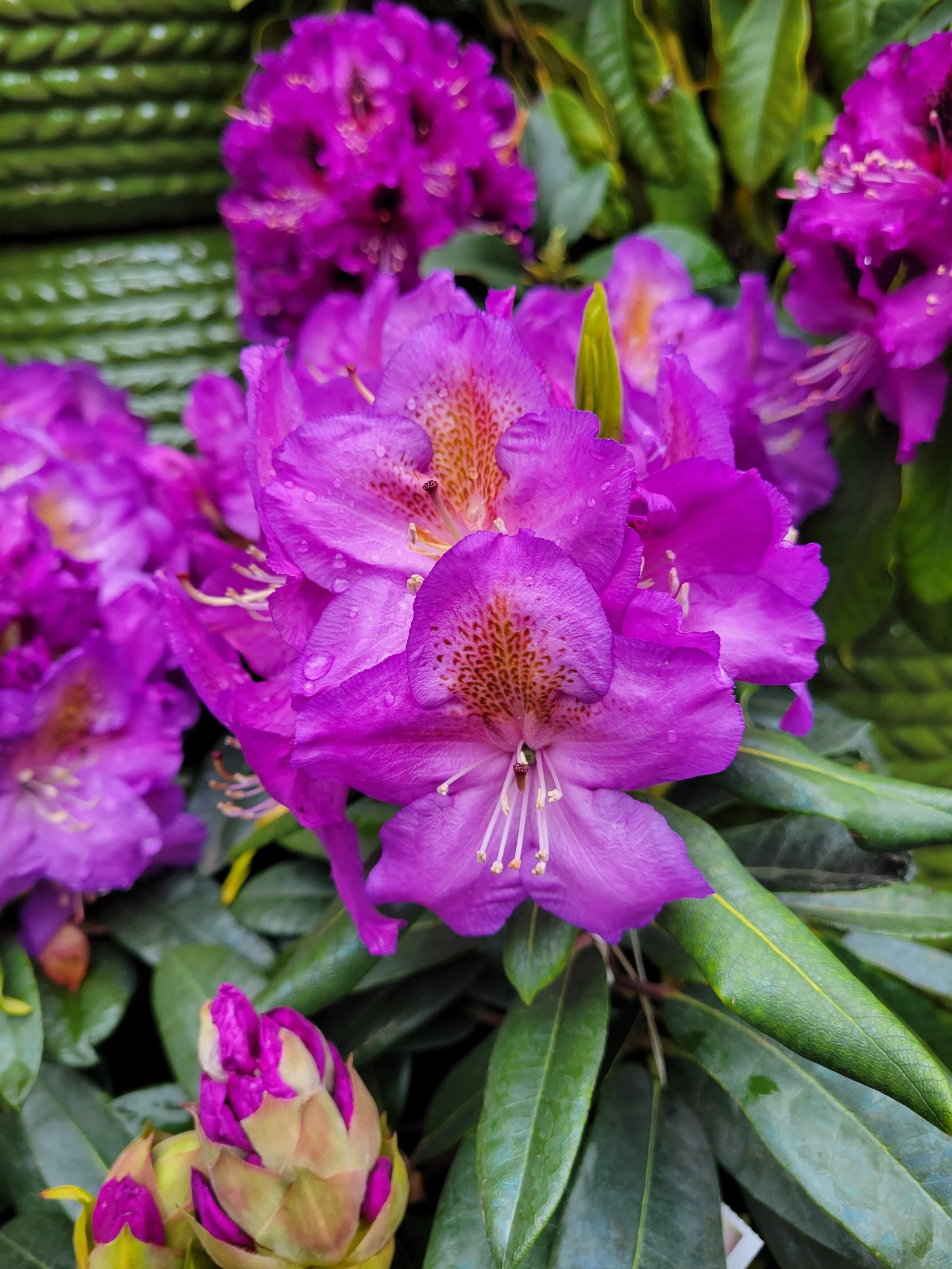
Rhododendron ‘Bluetopia’
Irrigation: Improper watering is the most common cause of failure when establishing rhododendrons. During their first 2-3 seasons, plants need frequent, thorough watering throughout the growing season, especially during bloom, leaf emergence, and bud set. Water deeply each time; frequency depends on soil and weather, not a set schedule. Once mature leaves develop, rhododendrons do not wilt but instead become leathery and curl inward when stressed, making water needs harder to judge. A moisture meter is strongly recommended. Drought stress appears as leaf scorch: dark brown patches, often near the midrib and sun-exposed side.
Once established, rhododendrons still require regular deep watering during the growing season. Shallow daily watering is ineffective; instead, irrigate deeply once or twice a month, moistening the top 12-18 inches of soil. Mature plants show drought stress as leaf scorch or excessive, poorly timed leaf drop.
Feeding/Fertilization: Healthy rhododendrons need moist, organic matter-rich soil. Avoid both over- and under-watering and mulch appropriately. Soil testing is recommended before fertilizing. For new landscapes with low organic matter, incorporate 1–1½ inches of acidic compost. When planting individual shrubs, amend backfill with one-third organic matter. Annual additions of compost (½ inch) or leaf mold (2 inches) improve soil fertility and moisture retention. While rhododendrons can perform well without fertilizer, annual applications of an acidic fertilizer (for rhodies, azaleas, camellias, or blueberries) are beneficial if not overapplied. Split applications: half in early spring as buds swell, and half just after flowering. Apply fertilizer across the root zone and water thoroughly afterward.
Azaleas
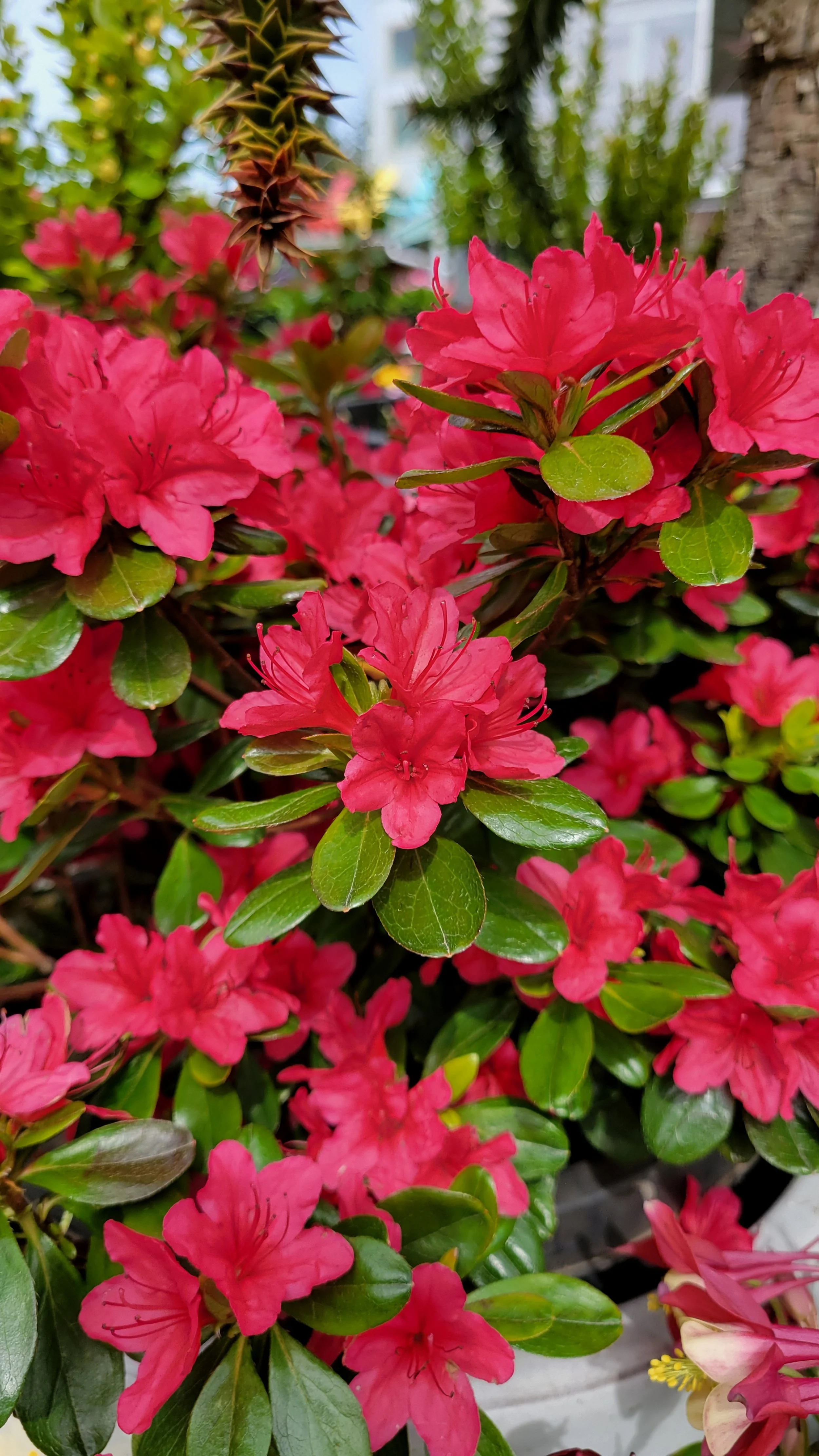
Rhododendron (Azalea) ‘Hino Crimson’
Azaleas are rhododendrons that have five pollen-bearing stamens not ten. They may be deciduous or evergreen. The deciduous azaleas produce showy blooms in large terminal trusses either just as or before or their leaves emerge for the season. In fall, their leaves often turn shades of burgundy, apricot, or yellow before dropping for the winter. The evergreen azaleas are normally smaller in stature (3-4 ft tall in 10 years) than the deciduous azaleas and have smaller, oval leaves that are retained until the next season's foliage is produced. In winter, these leaves may remain green or take on a bronze, reddish, or yellow cast. The flowers of evergreen azaleas are smaller and produced in clusters that are so numerous they often completely obscure the plant's foliage during bloom.
Both evergreen and deciduous azaleas are excellent accent or border plants. Evergreen azaleas are also often used as low hedges, mass plantings, or container accents.
Light Requirements: Most azaleas grow well in either full sun or part shade. Deciduous azaleas generally prefer full sun or open, slightly shaded conditions. Evergreen azaleas generally do best in dappled shade or full sun as long as sites with significant reflected heat and light are avoided. When sources indicate a cultivar has known preferences for afternoon shade or for part sun, we've noted this in the plant's description.
Pruning: For tips on how to prune Azaleas visit: https://www.rhododendron.org/pruning.htm (In addition to reading this article, be sure to read the linked articles that are specific to Azaleas).
West Seattle Nursery’s 2026 Azaleas
Click the button below to view the Azaleas we have on hand or hope to receive through the end of 2026. We cannot guarantee availability. Please come in to see our full selection. Download a PDF of the list here.
Questions? Email ray@westseattlenursery.com
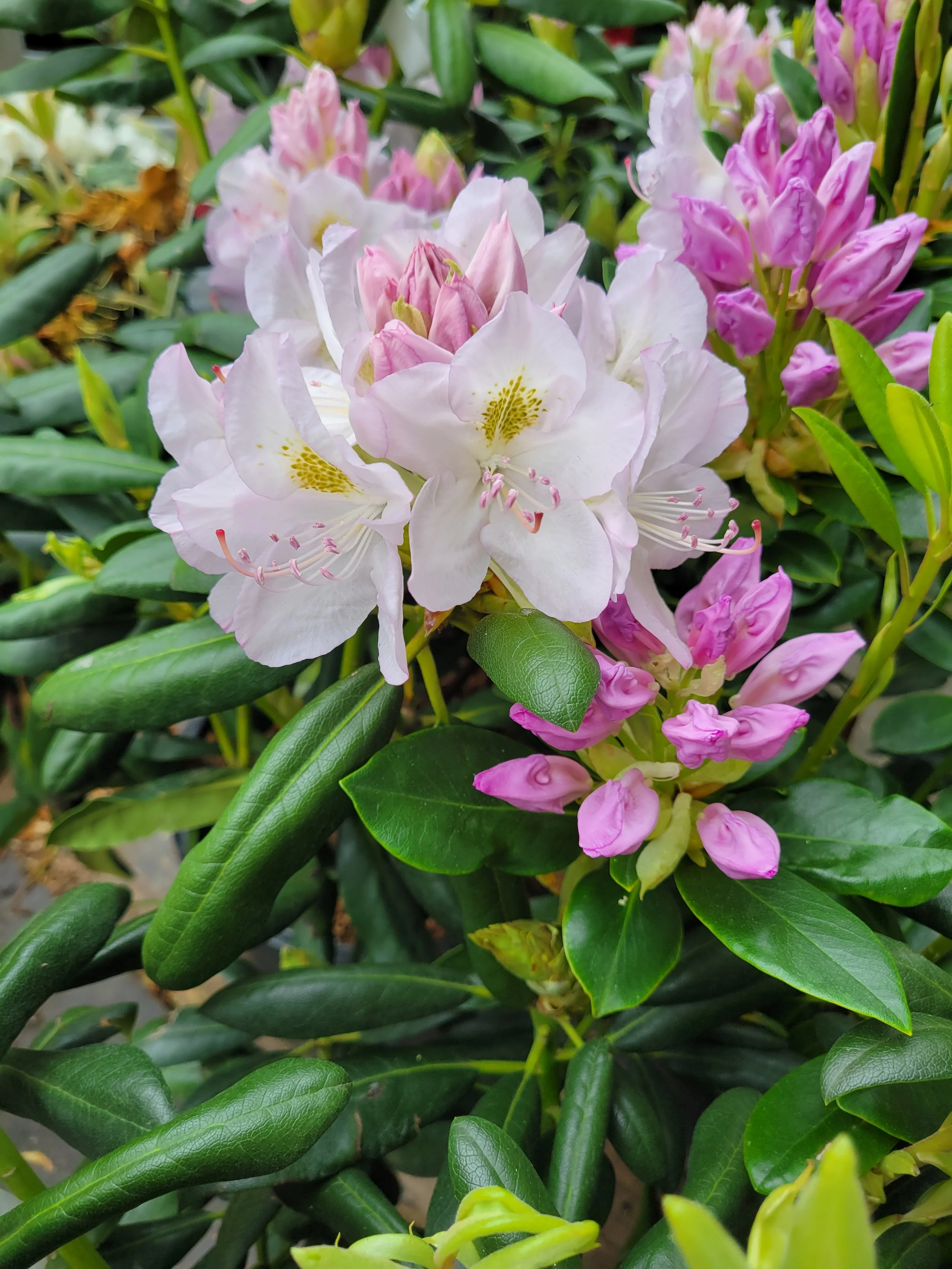
Rhododendron Catawbiense
The hybrid rhodies are the product of interspecies crosses made by amateur and professional horticulturists over the last century and a half. Some are heirlooms that have never gone out of style others are recent introductions. Most have leaves three to seven inches in length, but a few have much smaller, often "pine scented" leaves. All are relatively easy to grow provided the site into which they are planted provides soil that is well drained, relatively fertile, and moist. Very few have a light fragrance, so it’s all about their large trusses that come in a rainbow of colors.
Deadheading and Pruning: Deadheading is the act of removing spent blooms or young seed heads to improve the appearance of the plant during the growing season. To deadhead your rhododendron simply snap the spent truss from the tip of the stem (without damaging the buds immediately beneath it). For tips on pruning Azaleas visit: https://www.rhododendron.org/pruning.htm
West Seattle Nursery’s 2026 Hybrid Rhodies
Click the button below to view the Hybrid Rhodies we have on hand or hope to receive through the end of 2026. We cannot guarantee availability. Please come in to see our full selection. Download a PDF of the list here.
Questions? Email ray@westseattlenursery.com
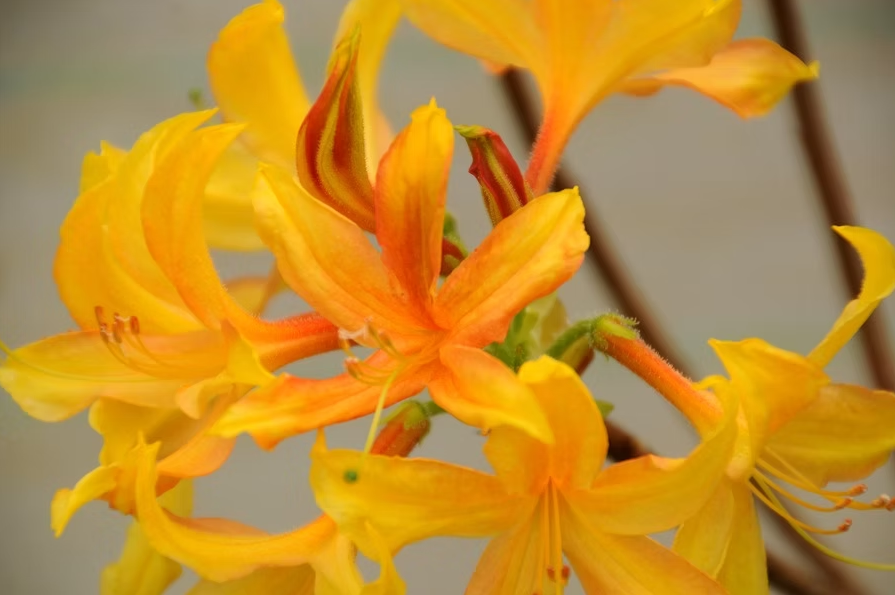
Rhododendron Luteum (Photo Credit: Chimicum Woods)
Species rhododendrons are the "unimproved" or "wild" cousins and parents of hybrid rhodies. Most of the plants we carry are grown from seed, often wild collected, by Bob Zimmermann of Chimacum Woods Rhododendron Nursery in Port Ludlow, WA. This means each individual is genetically unique and that individual plants may vary slightly in habit, growth rate, or flower color. A few have been purchased from other nurseries who have obtained and cloned "elite individuals" of wild species. Such plants may or may not have been assigned a cultivar name to denote their unique origin or character. Non-Chimacum Woods plants are marked with an asterisk.
While most can be grown in the same conditions as any hybrid rhododendron, be aware that some have very specific soil and water needs and may be more demanding. Most can be see during a visit to the Rhododendron Species Botanical Garden in Federal Way, WA. We suggest a visit!
West Seattle Nursery’s 2026 Species Azaleas & Rhodies
Click the button below to view the Camellias we have on hand or hope to receive through the end of 2025. We cannot guarantee availability. Please come in to see our full selection. Download a PDF of the list here.
Questions? Email ray@westseattlenursery.com

Meet the buyer: Ray!
Ray moved to Seattle 3 years ago after a fruitful horticulture career in Colorado, including 23 years as a community college instructor. He joined our staff in March of 2023.
Favorite shrub? “Ceanothus, because it’s drought tolerant and invites incredible amounts of bees to our gardens”