Happy Earth Day from West Seattle Nursery: Eco-Friendly Soil for Your Eco-Conscious Garden & How We're Doing Our Part
Maika Mattson
April 22, 2026
Earth Day feels especially meaningful this year. As gardeners and plant lovers, we're not just observers of the natural world; we're participants in it. Today we want to share some products we're excited about, what we're noticing in our region's climate, and a little about how West Seattle Nursery tries to walk the walk on sustainability.
Spotlight: E.B. Stone Earth First Peat-Free Potting Soil
We're thrilled to be carrying E.B. Stone Organics Earth First Potting Soil, a premium 100% peat-free mix ideal for indoor and outdoor plantings. It's made from entirely natural and organic ingredients: aged bark fines, coir, pumice, compost, earthworm castings, bat guano, and kelp meal. It improves moisture retention, adds air space for healthy roots, and is ready to use straight out of the bag.
E.B. Stone has been a family-owned company for over 100 years, rooted in Northern California. Their factory is 100% wind-powered, with two turbines generating enough energy to run their entire production facility and offices. It's the kind of company ethos we love to support.
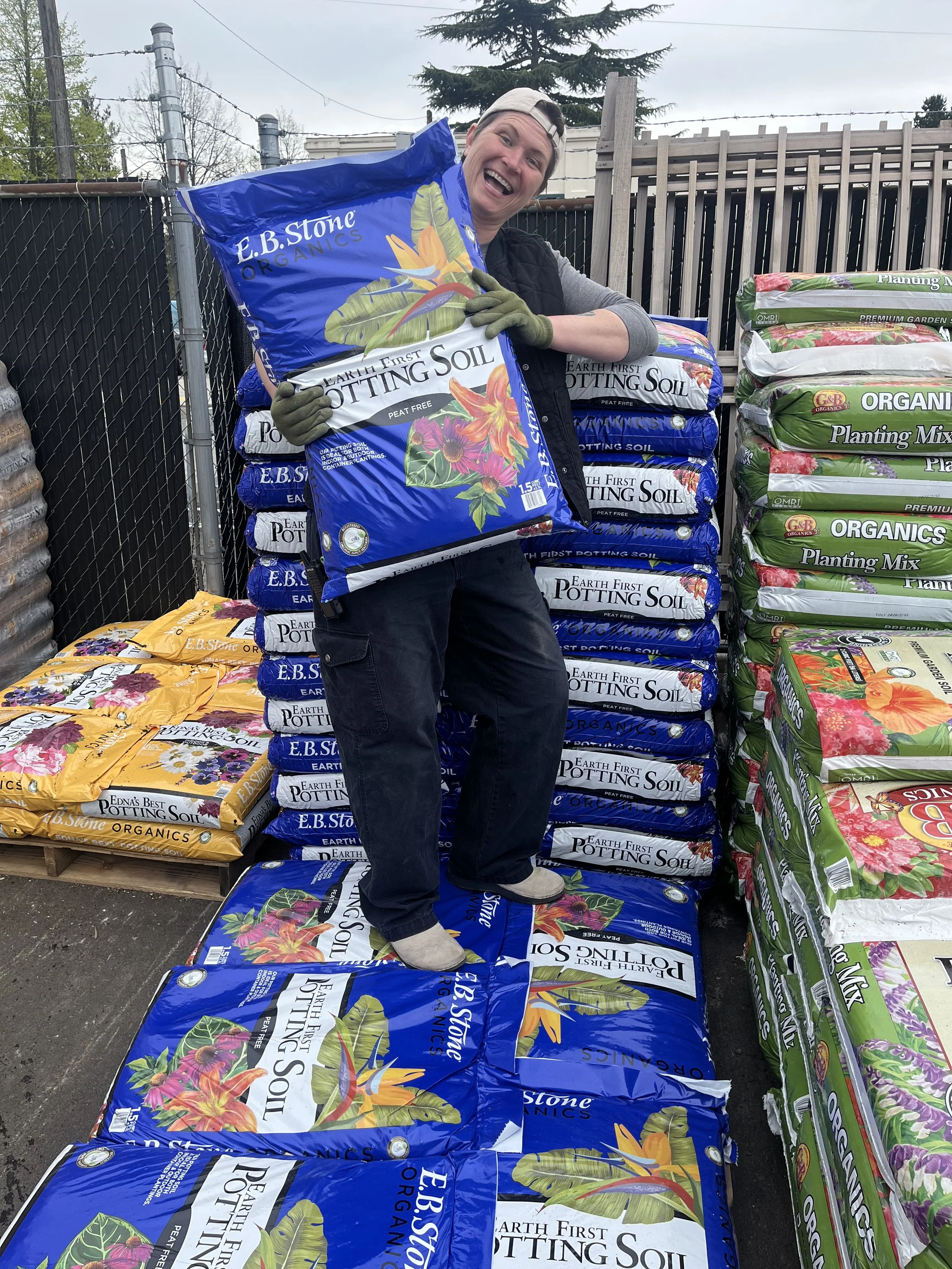
Earth First Potting Soil from E.B. Stone and our Garden Center Manager, Evie!
Why Go Peat-Free?
Peat works well for moisture retention, but the environmental cost is significant. It's harvested from ancient bogs that take thousands of years to form and store enormous amounts of carbon. When peat is harvested, that carbon is released into the atmosphere. Peat is also quite acidic and tends to repel water once it dries out, which can work against you in dry summer conditions.
We usually recommend compost or coco coir as more sustainable alternatives that perform beautifully in most gardens. Aged wood chips or bark are also wonderful for mulching and slowly improve soil structure over time.
Seacoast: Compost, Teabags, and a Peat-Free Potting Soil
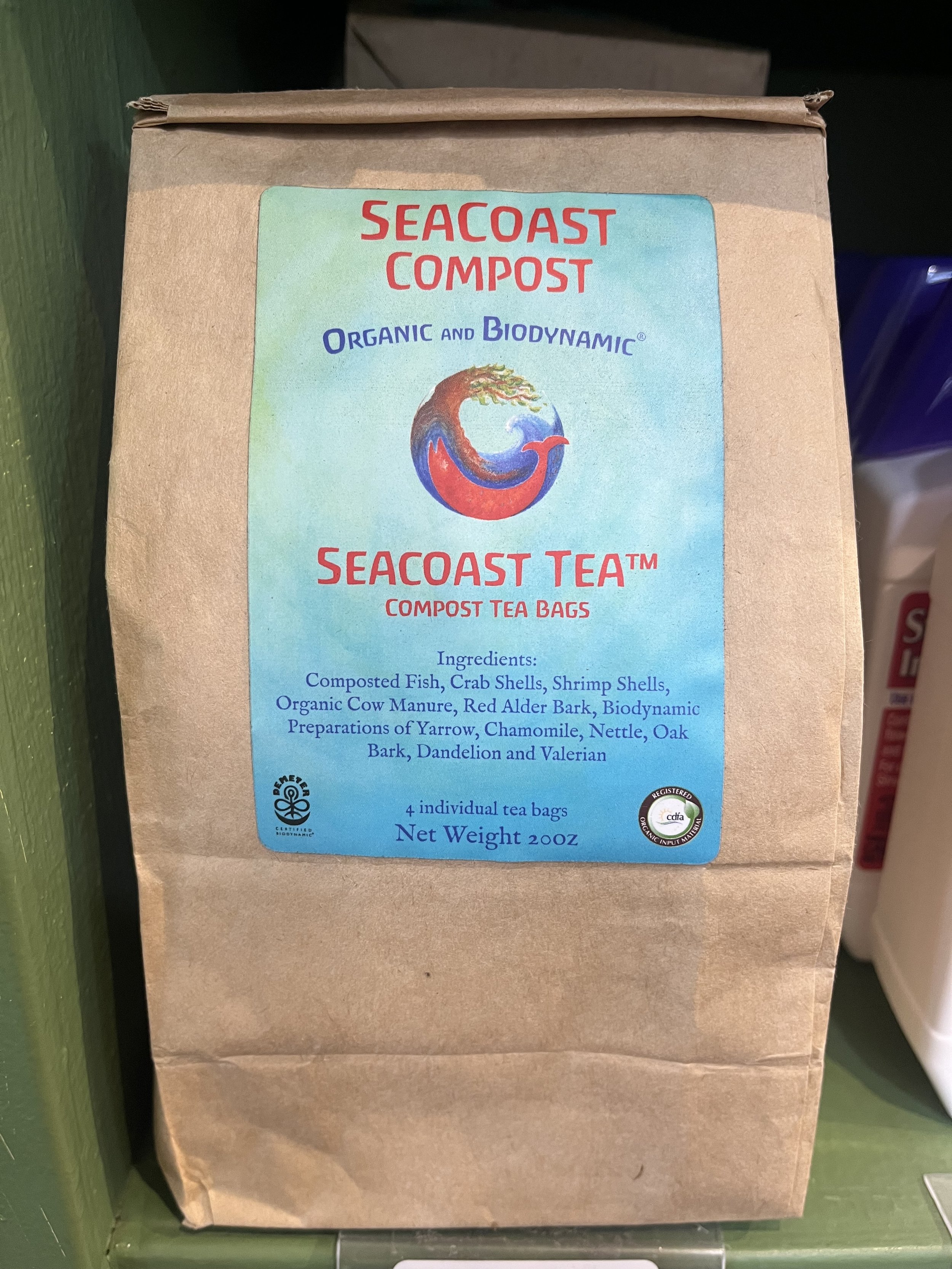
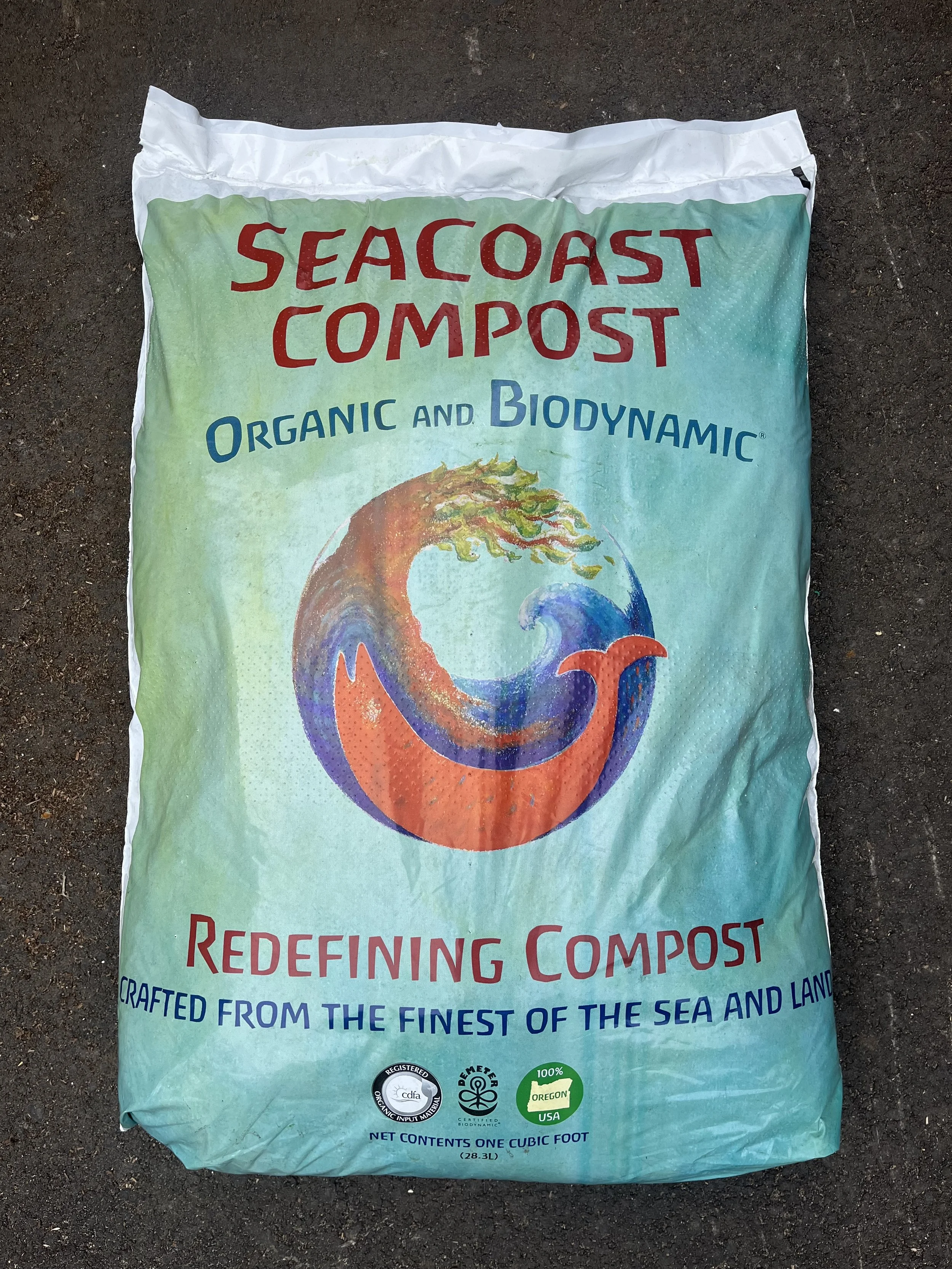
We carry several products from the Seacoast line. Their Seacoast Compost is a go-to for enriching soil and feeding beneficial microbes, and their Seacoast Compost Teabags are a handy way to brew a nutrient-rich tea for houseplants or containers. We also carry their Seacoast Enlivened Potting Soil, another peat-free option great for containers and in-ground plantings. Come in and we're happy to help you find the best fit.
Mother Soil: Our Favorite for Indoor Plants
For houseplants, we love Mother Soil, a PNW-made potting mix created by one of our own West Seattle Nursery customers. Produced locally in the Pacific Northwest, it features a probiotic blend of 800 beneficial microbes and locally sourced biochar, a carbon-negative substrate that improves both water retention and aeration. If you're repotting a monstera or freshening up your houseplants, it's worth trying. We're proud to support local makers, especially ones who shop with us!
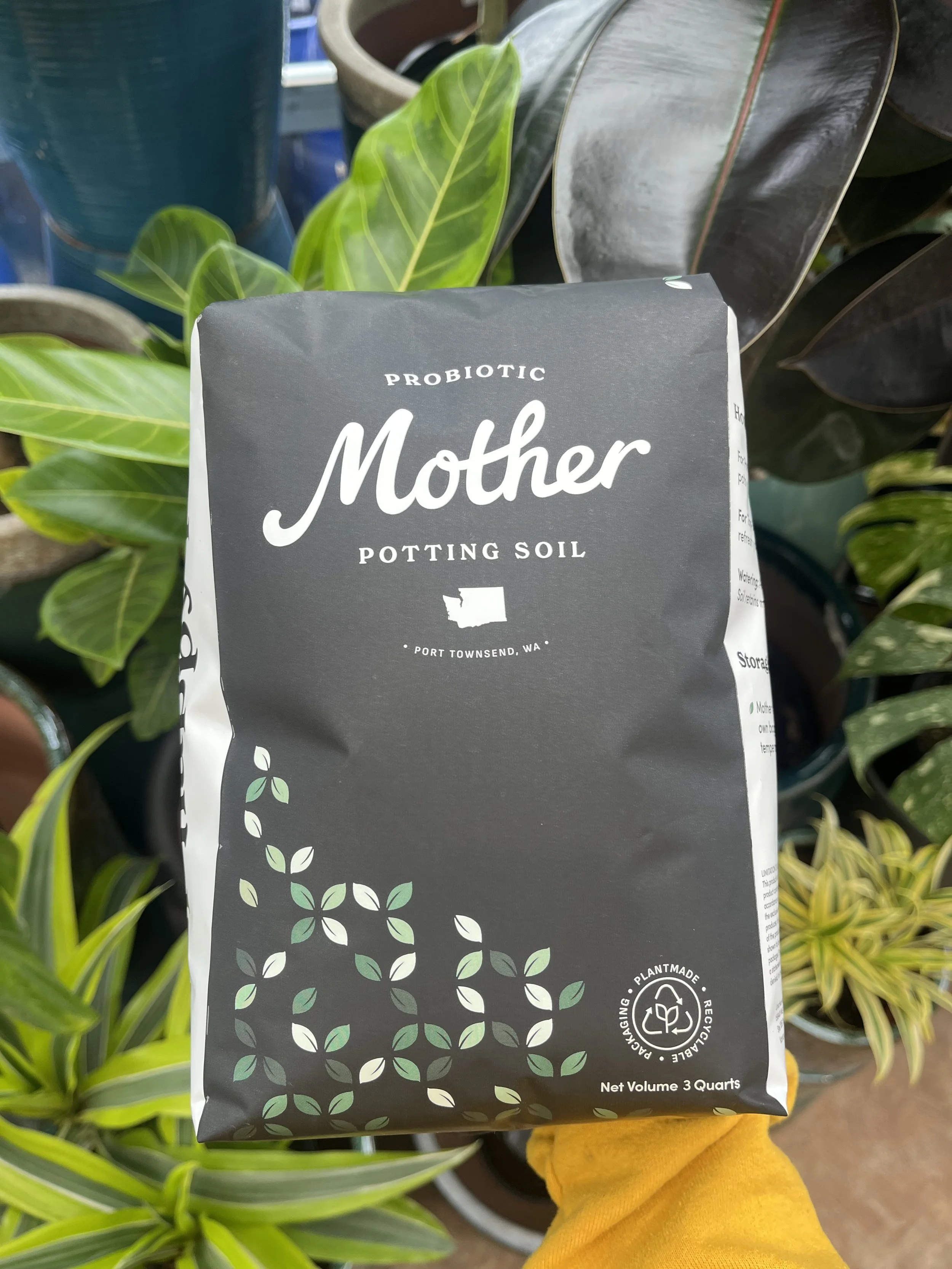
Probiotic Mother Potting Soil
Washington's Drought and What It Means for Your Garden
On April 8, the Washington State Department of Ecology declared a statewide drought emergency, the fourth consecutive year with a drought declaration. Washington received about 104% of normal precipitation this winter, but the season was so warm that most of it fell as rain rather than accumulating as mountain snowpack. Statewide snowpack is sitting at roughly 46% of normal.
Seattle Public Utilities planned ahead and does not anticipate mandatory water restrictions for SPU customers. Still, the Department of Ecology is asking for voluntary conservation across the state, and we think that's a spirit worth embracing.
This is a great moment to think about water-wise gardening. Come talk to us; we can recommend drought-tolerant plants suited to your specific spot, whether you have full sun, part shade, containers, or an in-ground bed. Mulching is also one of the best things you can do: a 2-3 inch layer dramatically reduces evaporation, suppresses weeds, and moderates soil temperature. Low-effort, high-reward, and we can set you up today. You can also check out our blog post on watering tips to ensure you are watering your garden efficiently.
A Word on Native Plants
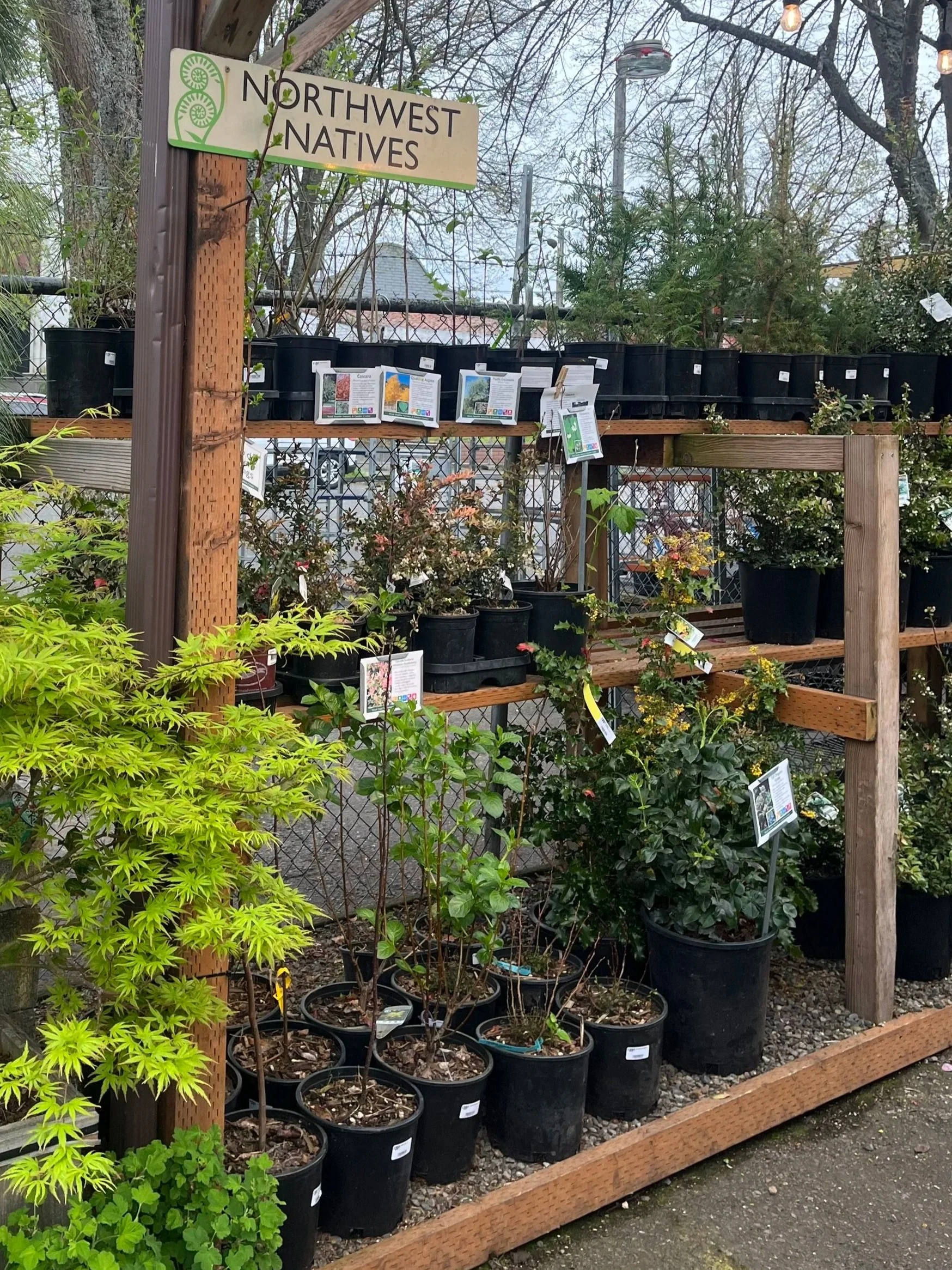
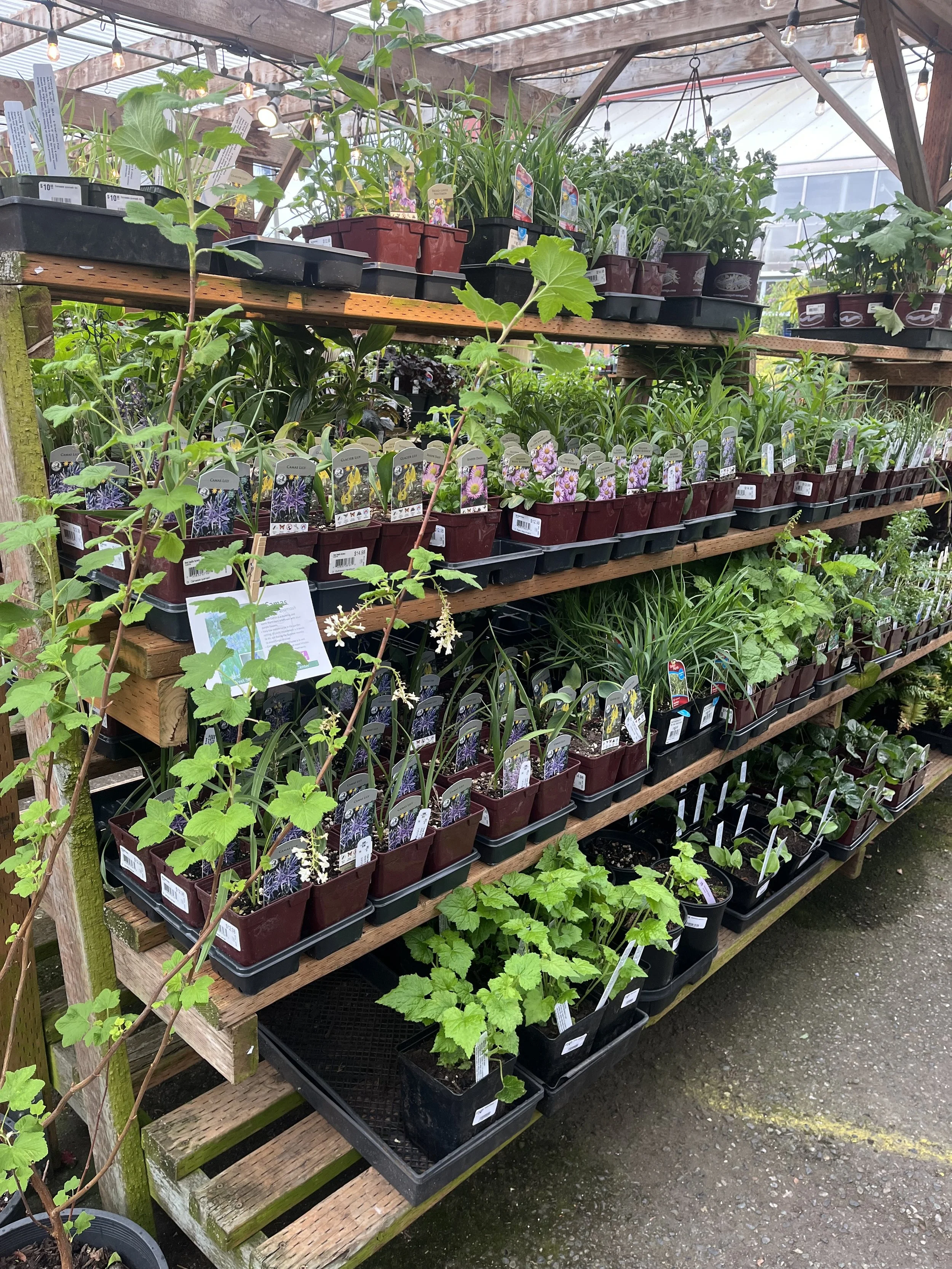
We've been expanding our native plants section over the past couple of years and are genuinely thrilled about it. Just a few Northwest natives in your ornamental beds can make a remarkable difference for pollinators, birds, and beneficial insects. Natives are also naturally adapted to our climate, meaning far less water and care once established. Ask us what's new!
How WSN Takes Care of Waste
Running a nursery means a steady stream of plastic trays and yard waste. Here's how we handle it:
Styrofoam & certain plastics: Ridwell
All other plastics, including nursery trays: Key Works
Yard waste: Cedar Grove picks up directly for composting
Nursery pots: We partner with growers to return and reuse them. And if you'd like to take one home to repot a houseplant? Please ask, we love that!
Come See Us
Whether you're looking for peat-free potting soil, compost for your raised beds, native plants, or just want to talk through what your garden needs this season, stop by anytime. We'd love to help!
Happy Earth Day 🌍
The Team at West Seattle Nursery
Sources
E.B. Stone Organics Earth First Potting Soil: ebstone.org
E.B. Stone history and wind power: ebstone.org/about-us and Sloat Garden Center
Washington Drought Emergency Declaration (April 8, 2026): ecology.wa.gov
Statewide Drought Conditions: ecology.wa.gov/drought-response
Seattle SPU voluntary conservation: seattle.gov/utilities
Washington drought frequency trend: KUOW / Northwest News Network