Pollinators and their favorite plants!
Thea Watson and Maika Mattson
May 28, 2026
Did you know there are hundreds of thousands of insect pollinators and about 2,000 species of bird pollinators globally? Yet with natural habitats shrinking, pollinators increasingly depend on our gardens for food and shelter. Research has found that urban landscapes are actually hotspots of nectar diversity, with more kinds of flowering plants producing nectar in towns and cities than in many farmland and nature reserve sites. Our gardens matter more than we think. Let's meet some of the hardest working visitors in your garden.
Bees
Washington state is home to an estimated 600 species of bees, and they are by far the most productive pollinators in the world, pollinating thousands of plants a day! Bees are most commonly found visiting flowers with a central landing zone, or "eye," and those that carry plenty of nectar. Perennials with fresh, aromatic fragrances are also particularly attractive to them.
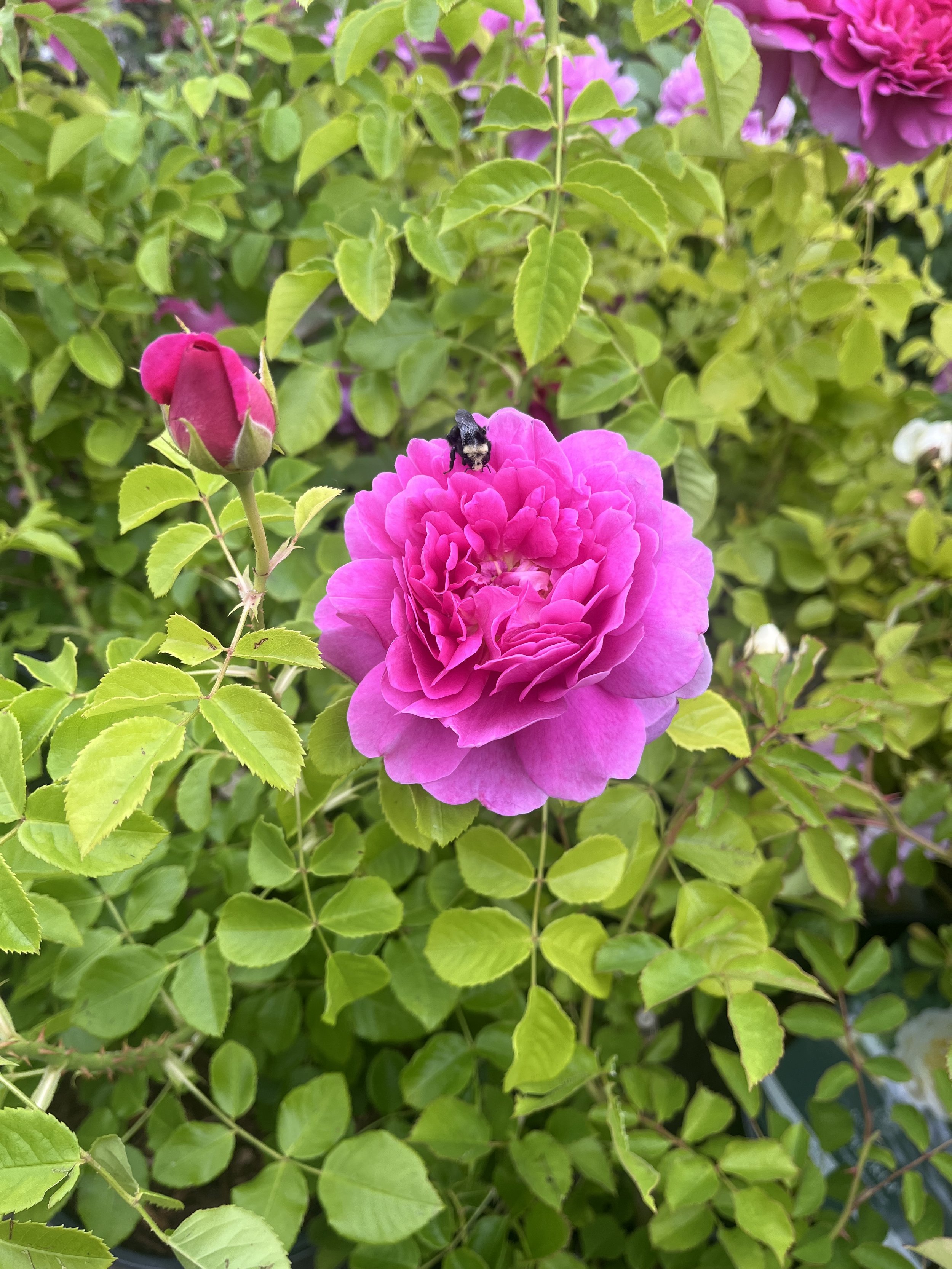
A bumble bee taking a nap on a rose
Eg: Shasta Daisy (Leucanthemum), Blanket Flower (Gaillardia), Asters, Black-Eyed Susan (Rudbeckia), Bee Balm (Monarda), Foxglove (Digitalis)
Butterflies
Butterflies are active during the day and visit a wide variety of wildflowers, probing for nectar. They typically favor flat, clustered flowers that provide a landing pad, and most commonly visit red, yellow, and orange blooms that are open during the day.
Eg: Milkweed (Asclepias), Coneflower (Echinacea), Butterfly Bush (Buddleja), Lantana, Zinnias, Meadow Rue (Thalictrum)
Moths
After dark, moths take over the night shift for pollination. They are attracted to pale or white flowers heavy with fragrance and copious, dilute nectar. That said, not all moth pollinators are strictly nocturnal, some are also active by day.
Eg: Evening Primrose (Oenothera), Evening-Scented Phlox (Zaluzianskya capensis), Night-Blooming Jasmine (Cestrum nocturnum)
Flies (+ Gnats & Mosquitoes)
Flies are the second most frequent flower visitors after bees, making them important pollinators in their own right. Many flower flies exhibit a characteristic hovering flight pattern when approaching a plant, which is how they earned the name "hover flies." The flowers they pollinate tend to be pale and dull in color (dark brown or purple), sometimes flecked with translucent patches, and occasionally carry a poor odor. The flowers are often tubular or have a complex trap shape.
Eg: Clustered Mountainmint (Pycnanthemum muticum), Trillium, Catmint (Nepeta), Skunk Cabbage (Symplocarpus foetidus)
Beetles
Beetles were among the first insects to visit flowers and remain especially important pollinators for ancient plant species such as Magnolias and Spicebush (Lindera benzoin). The flowers they visit are typically bowl-shaped, white or green, strongly fruity in scent, open during the day, and moderate nectar producers.
Eg: Magnolias, Waterlily (Nymphaea), Goldenrod (Solidago), Yarrow (Achillea)
Hummingbirds
In Washington State, hummingbirds play a major role in wildflower pollination. The flowers they visit tend to be tubular in shape with strong supports for perching, brightly colored, and odorless since birds have a poor sense of smell. These flowers are typically open during the day, prolific nectar producers with deeply hidden nectar, and modest pollen producers designed to dust the bird's head and back as it forages.
Eg: Fuchsia, California Fuchsia (Epilobium), Cape Fuchsia (Phygelius), Columbine (Aquilegia), Honeysuckle (Lonicera), Hellebore, Hyssop (Agastache), Salvias
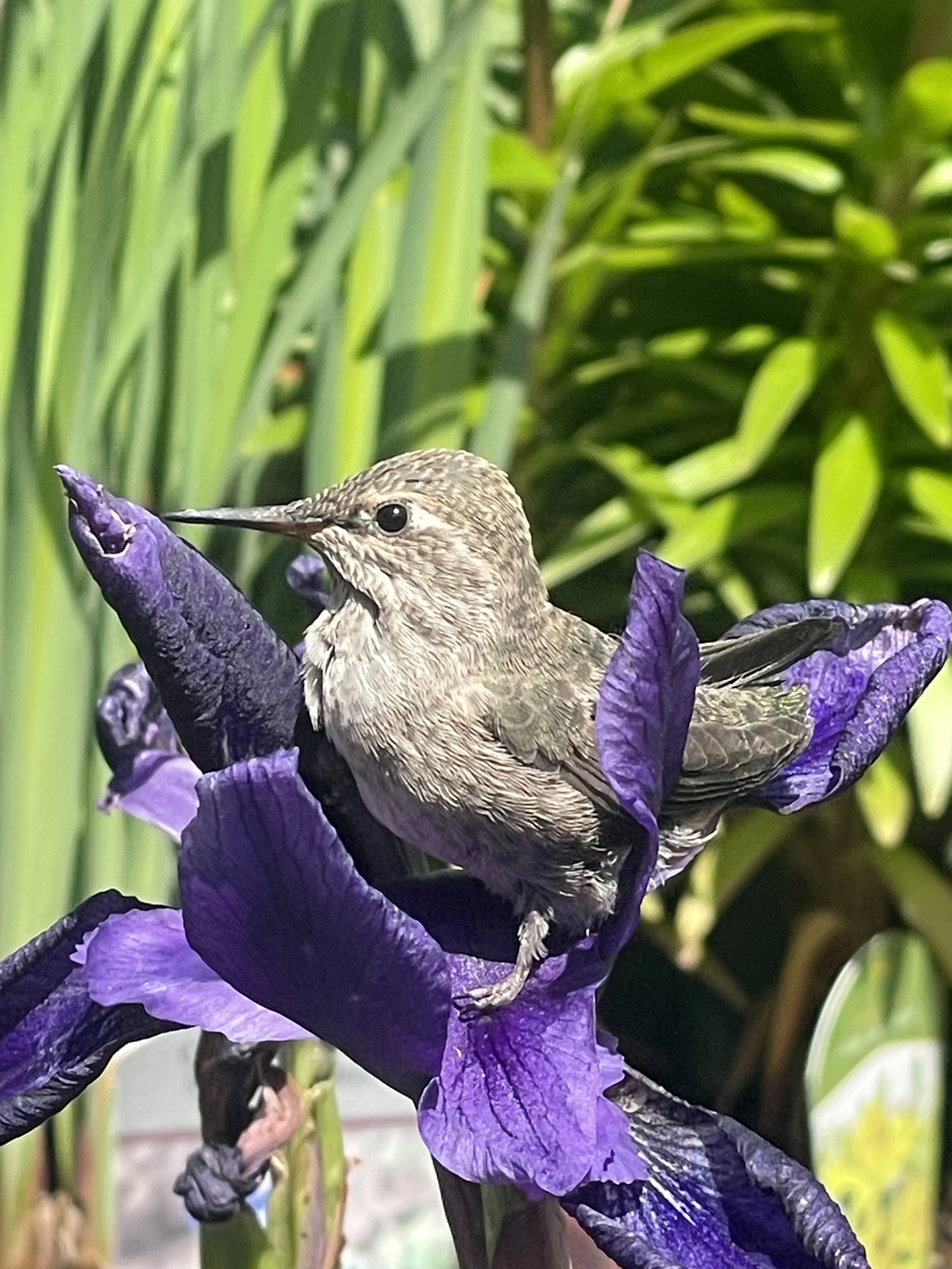
Baby hummingbird that landed on an iris after its first flight out of its nest! Photo taken by Mary H
Wasps
Wasps often get a bad reputation, but some species are excellent pollinators and in certain situations can be even more efficient than bees! Many wasps are generalist pollinators, passively transferring pollen while feeding on nectar from a variety of plants. The flowers that attract them tend to have dull coloration, an unusual odor, and readily accessible, concentrated nectar. Most wasps can also see UV light and tend to favor white or yellow-colored flowers.
Eg: Pineapple Lily (Eucomis), Fig (Ficus carica), Orchids, Celosia
Sources:
Hicks, D.M. et al. (2016). "Why urban gardens are crucial for conserving bees and butterflies." The Conversation. theconversation.com